This kodak scanza film scanner review looks at a compact way to convert selected film negatives and slides into JPEG files.
The SCANZA suits people who want to preview and save scans through a built-in display without building a more involved scanning setup.
Kodak SCANZA Scanner Review Summary
The quick verdict
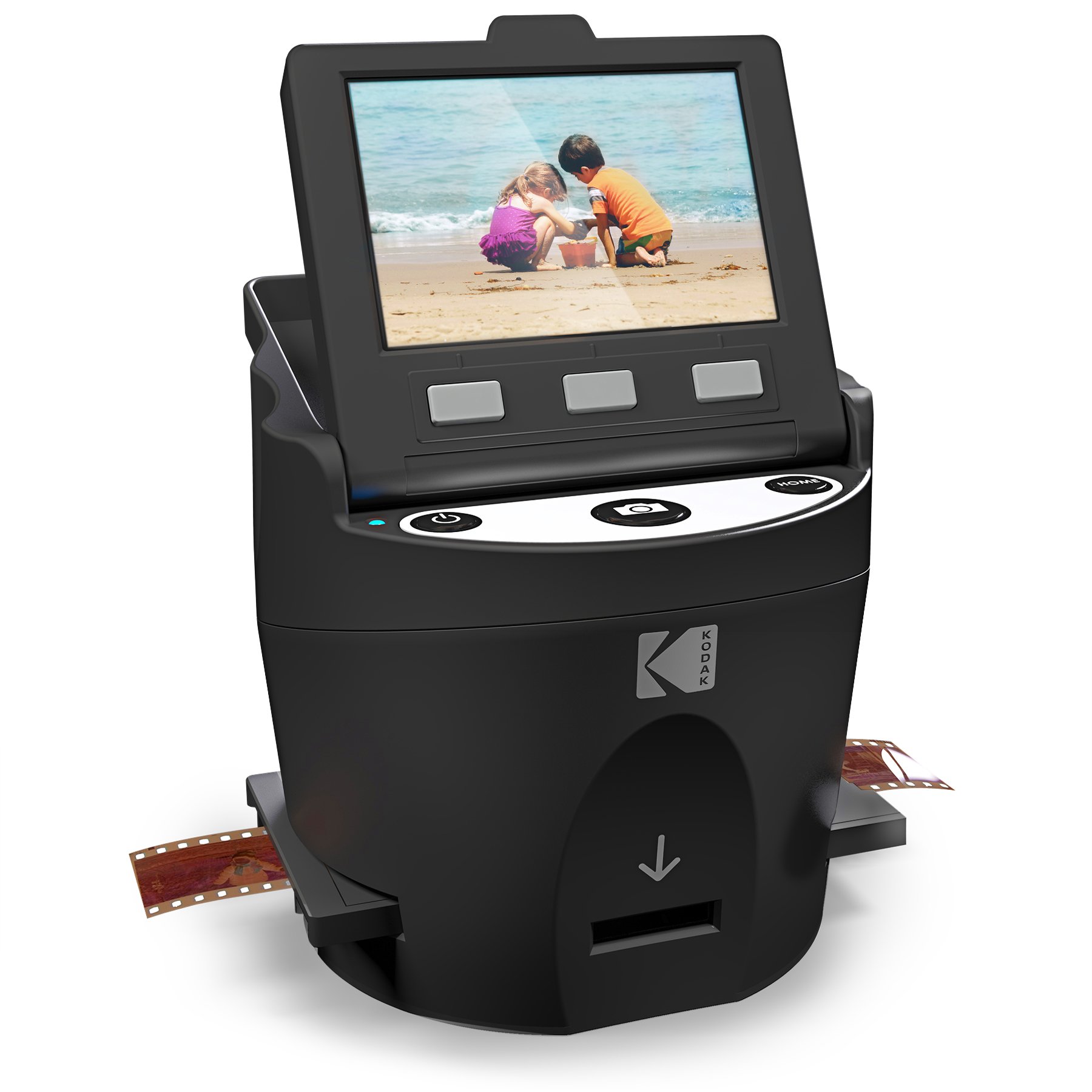
11,000+ ratings
Read Amazon ReviewsKodak SCANZA Film & Slide Scanner
A convenient fit for digitizing family negatives and slides across several supported formats, with on-device previews and simple scan controls.
- Converts 35mm, 126, 110, Super 8, and 8mm negatives and slides into JPEG files.
- Includes multiple film inserts and adapters for the supported formats.
- Built-in 3.5-inch TFT color display has adjustable brightness and a tilt function.
- Large one-touch buttons provide scan and save operation.

Pros
- Handles several common home-archive film formats, including Super 8 and 8mm.
- Lets users preview images on its built-in tilting screen.
Consider before buying
- The supported formats are limited to the five listed; buyers should confirm their archive does not depend on another film type.
- An SD card is required for card-based saving and must be supplied separately.
Read the full review summary
The SCANZA is designed around straightforward conversion: choose a compatible film insert, preview the image on its 3.5-inch display, and use the one-touch scan and save controls.
Its supplied adapters cover 35mm, 126, 110, Super 8, and 8mm negatives or slides, giving owners of mixed-format family archives a practical starting point.
The display can tilt and has adjustable brightness, while the interface offers RGB and resolution adjustments and a gallery for browsing saved images. It can save to an SD card up to 128GB, which must be purchased separately.
This is a good fit for casual home archiving; people who need formats beyond those listed or prefer a computer-centered editing workflow should check whether the device’s format and output options match their plans.
The buying factors
Kodak SCANZA Scanner Scorecard
Editorial scores reflect listed features and buyer fit; they are not laboratory measurements or customer ratings.
Film format coverage
The included adapters support five named film formats, covering a useful range for many family collections.
On-device preview
A bright 3.5-inch color screen with adjustable brightness and tilt makes it easier to inspect images at the scanner.
Ease of operation
One-touch scanning, large buttons, and a tray and insert directory are aimed at a simple workflow.
Image adjustment
The interface provides RGB and resolution adjustments, though the description does not detail more extensive editing tools.
Standalone saving
It can browse a gallery and save scans to an SD card up to 128GB, with the card sold separately.
Connection flexibility
Included USB, HDMI, and video cables offer several connection options, alongside Mac and PC compatibility.
Key Features and Specifications of Kodak SCANZA Scanner
- Converts 35mm, 126, 110, Super 8, and 8mm negatives and slides into JPEG files.
- Includes multiple film inserts and adapters for the supported formats.
- Built-in 3.5-inch TFT color display has adjustable brightness and a tilt function.
- Large one-touch buttons provide scan and save operation.
- Interface includes a tray and insert directory, RGB and resolution adjustments, and a gallery.
- Supports SD cards up to 128GB; the card is not included.
- Includes USB power, HDMI, AC adapter, and video cables, plus a film cleaning brush; compatible with Mac and PC.
Pros and Cons of Kodak SCANZA Scanner
Pros
- Handles several common home-archive film formats, including Super 8 and 8mm.
- Lets users preview images on its built-in tilting screen.
- Simple controls and a directory for the inserts help keep the scanning process approachable.
- Offers basic color and resolution adjustments before saving.
Consider before buying
- The supported formats are limited to the five listed; buyers should confirm their archive does not depend on another film type.
- An SD card is required for card-based saving and must be supplied separately.
- The description does not specify detailed output settings or a computer-based editing workflow, so buyers with particular image-quality or editing requirements should check those needs before choosing.
Who Should Buy Kodak SCANZA Scanner?
Good fit
Consider the SCANZA if you have a varied box of older negatives and slides in its supported formats and want to digitize them at home with a direct preview.
The adapter set and on-device controls make it approachable for occasional family archiving without requiring a complicated process.
It is also a reasonable option when you want to review scans on a screen as you work and save them to removable storage.
Plan to provide an SD card, and make sure the film sizes and formats in your collection match the supported list.
Who should skip it
Skip this model if your collection includes formats outside 35mm, 126, 110, Super 8, and 8mm, or if your workflow depends on detailed computer editing and specific output controls that are not described here.
Kodak SCANZA Scanner: What the Design Means for Home Archiving
A useful spread of supported formats
The inclusion of 35mm, 126, and 110 alongside Super 8 and 8mm gives the SCANZA relevance for collections that span still photography and home movie film.
The adapters are central to that flexibility, so sorting a collection by format before scanning can help keep the process organized and confirm that each reel or frame is a match.
Previewing before saving
The 3.5-inch display allows images to be viewed on the scanner, and its tilt and brightness adjustments can help position the screen for a comfortable working angle.
That makes the device more self-contained for browsing a batch; buyers who need to judge fine detail closely should consider whether a small built-in display is sufficient for their review needs.
A simple route from film to file
Large one-touch controls and a tray directory emphasize ease of use, while RGB and resolution adjustments give users some control over the resulting JPEGs.
An SD card supports direct saving and gallery browsing, but it is an additional purchase, so include compatible storage in your setup.
Connections and practical setup
The included cables and AC adapter provide several ways to power or connect the scanner, and the product is described as compatible with Mac and PC.
The cleaning brush is intended for film and the light box; removing dust before scanning can help avoid visible speckles in the resulting images.
Alternatives to Kodak SCANZA Scanner
Slide & Negative Scanners alternative
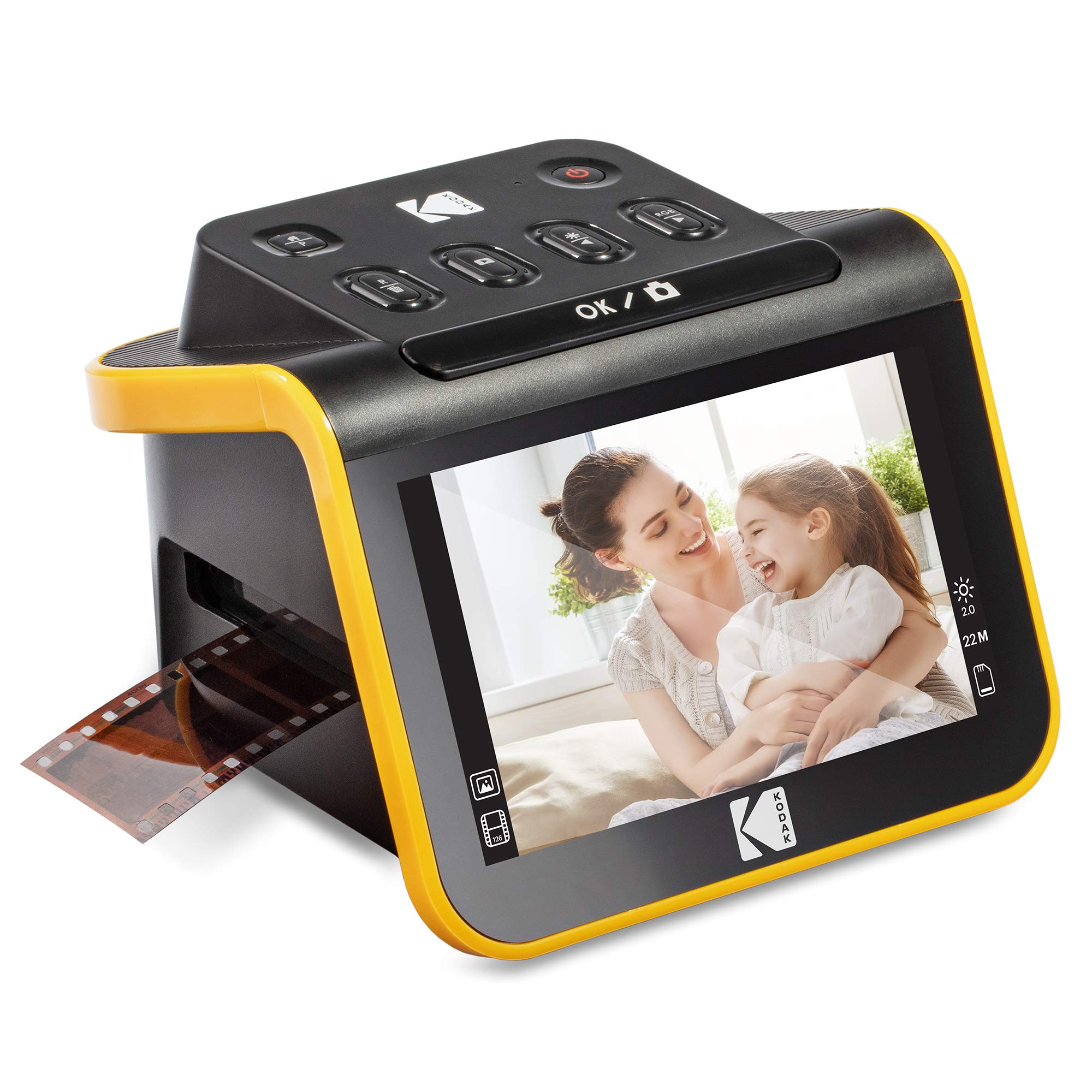
12,000+ ratings
Read Amazon ReviewsKodak Slide N Scan Film & Slide Scanner
Choose the SCANZA if Super 8 or 8mm support is important to your collection. The Slide N Scan may suit buyers focused on 135, 110, and 126 formats who prefer a larger viewing screen and quick-feeding tray.
- The Slide N Scan supports 135, 110, and 126 film and slides, has a 5-inch display, and includes a quick-feeding tray.
- It saves to SD or SDHC cards up to 32GB.
- The SCANZA supports 35mm, 126, 110, Super 8, and 8mm formats and includes a 3.5-inch tilting display.
Slide & Negative Scanners alternative
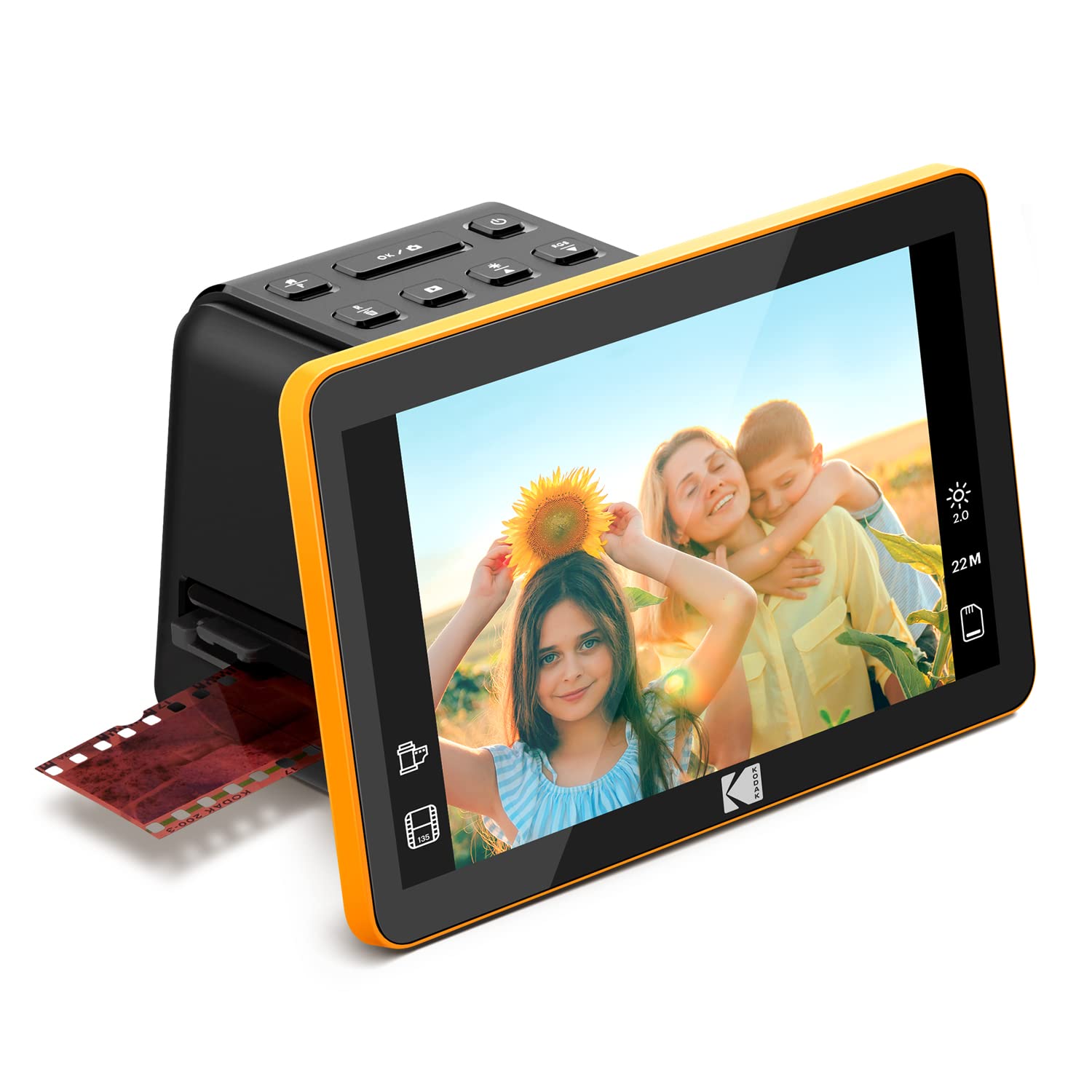
1,000+ ratings
Read Amazon ReviewsKodak Slide N Scan Max Film Scanner
The SCANZA is the better fit of these two when Super 8 or 8mm is part of the archive.
Consider the Slide N Scan Max if your collection is limited to its listed formats and its smooth tray or stated output options are more relevant to your workflow.
- The Slide N Scan Max supports 135, 110, and 126 film, uses a smooth-moving tray, and saves directly to SD or SDHC cards up to 32GB.
- Its listed sensor is 13MP CMOS, with output up to 4208 × 3120 through 22MP interpolation.
- The SCANZA’s listed formats include Super 8 and 8mm as well as 35mm, 126, and 110.
Is Kodak SCANZA Scanner Worth It?
The Kodak SCANZA Film & Slide Scanner is worth considering for home digitizing when your collection includes its supported formats and you value a built-in preview screen, simple controls, and direct SD-card saving.
Its range across still-film and movie-film formats is the clearest reason to choose it.
Before buying, confirm that your film types are covered and plan for a separate SD card.
If your needs center on a larger screen or a different tray and output workflow, compare those priorities against the SCANZA’s format coverage and straightforward controls.
Your review at a glance
11,000+ ratings
Read Amazon ReviewsKodak SCANZA Film & Slide Scanner
A convenient fit for digitizing family negatives and slides across several supported formats, with on-device previews and simple scan controls.
- Converts 35mm, 126, 110, Super 8, and 8mm negatives and slides into JPEG files.
- Includes multiple film inserts and adapters for the supported formats.
- Built-in 3.5-inch TFT color display has adjustable brightness and a tilt function.
- Large one-touch buttons provide scan and save operation.